
🎓 StudySphere — Collaborative Notes Sharing with Token Economy
StudySphere is a decentralized, pool-based notes-sharing and RAG (Retrieval-Augmented Generation) platform that turns passive note-taking into an active, rewarded learning ecosystem. It bridges the gap between individual effort and collective knowledge by solving the "freeloader" problem through an AI-driven token economy.
StudySphere
Collaborative Notes Sharing with Token Economy
Tags: EdTech · RAG · Token Economy · Gemini · Pinecone · LangChain · Node.js · Express · PostgreSQL · Vector Database · AI Auto-Grading · Full-Stack · Multi-Tenancy · Peer Learning
StudySphere is a decentralized, pool-based notes-sharing and RAG (Retrieval-Augmented Generation) platform that turns passive note-taking into an active, rewarded learning ecosystem. It bridges the gap between individual effort and collective knowledge by solving the "freeloader" problem through an AI-driven token economy.
Links
| 🚀 Live Demo | studysphere.vercel.app |
| 🎥 Demo Video | Watch the Walkthrough |
| 🗺️ System Architecture | Excalidraw ER Diagram |
Hackathon Evaluators: Email delivery may be delayed in the staging environment due to third-party sandbox limitations. Use these demo credentials for immediate testing:
Account Password User 1 user1@gmail.comkeerthivasanUser 2 user2@gmail.comkeerthivasan
The Problem
Traditional digital learning environments face three structural flaws:
- The Freeloader Problem — Peer-to-peer learning fails because there is no systemic incentive to reward core contributors or engage passive students.
- Unstructured Information — Fast-paced, messy student notes lose context and meaning over time.
- Inefficient Revision — Learners waste critical hours re-reading entire documents instead of precision-targeting missing concepts.
The Solution
- Isolated Context Pools — Each subject or lecture series has its own Pool with a dedicated RAG context. The AI strictly draws answers from documents uploaded to that exact namespace, eliminating cross-subject hallucinations.
- Token-Based Learning Economy — Users earn tokens by uploading high-quality study materials, and spend tokens to query the AI or generate summaries. Continuous contribution is the only path to continued access.
- AI-Powered Auto-Grading — Every uploaded note is parsed for clarity and depth, with tokens dynamically allocated based on assessed value.
Tech Stack
| Layer | Technologies |
|---|---|
| Backend | Node.js, Express |
| Database | PostgreSQL, Drizzle ORM |
| Vector & AI | Pinecone (multi-tenant namespaces), Gemini 1.5 Flash/Pro, LangChain |
| Auth | JWT, bcrypt |
| File & Mail | Multer, Cloudinary, Nodemailer |
| Dev Tools | dotenv, Nodemon |
Architecture
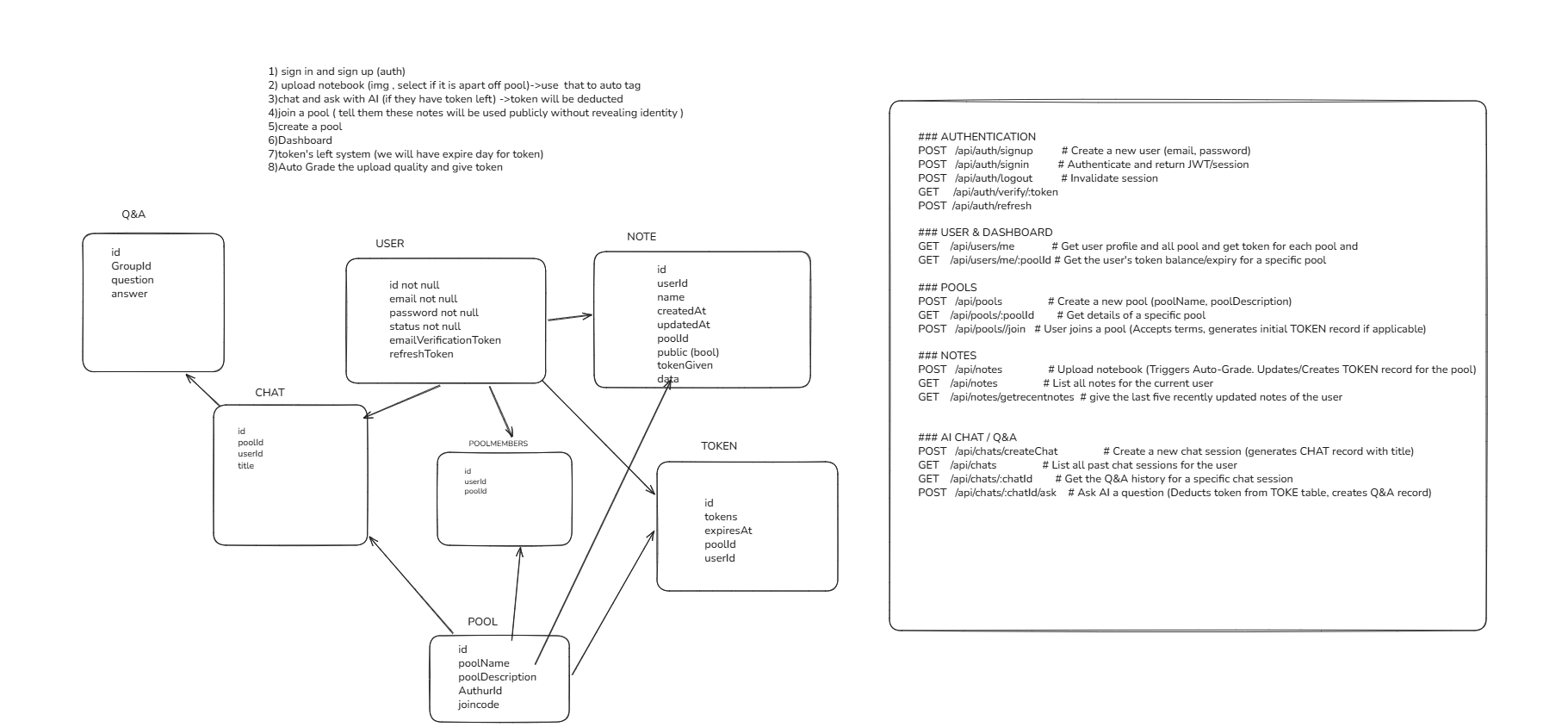
Upload Quality Notes ➔ Earn Tokens ➔ Ask Complex Questions ➔ Spend Tokens ➔ Repeat
How It Works
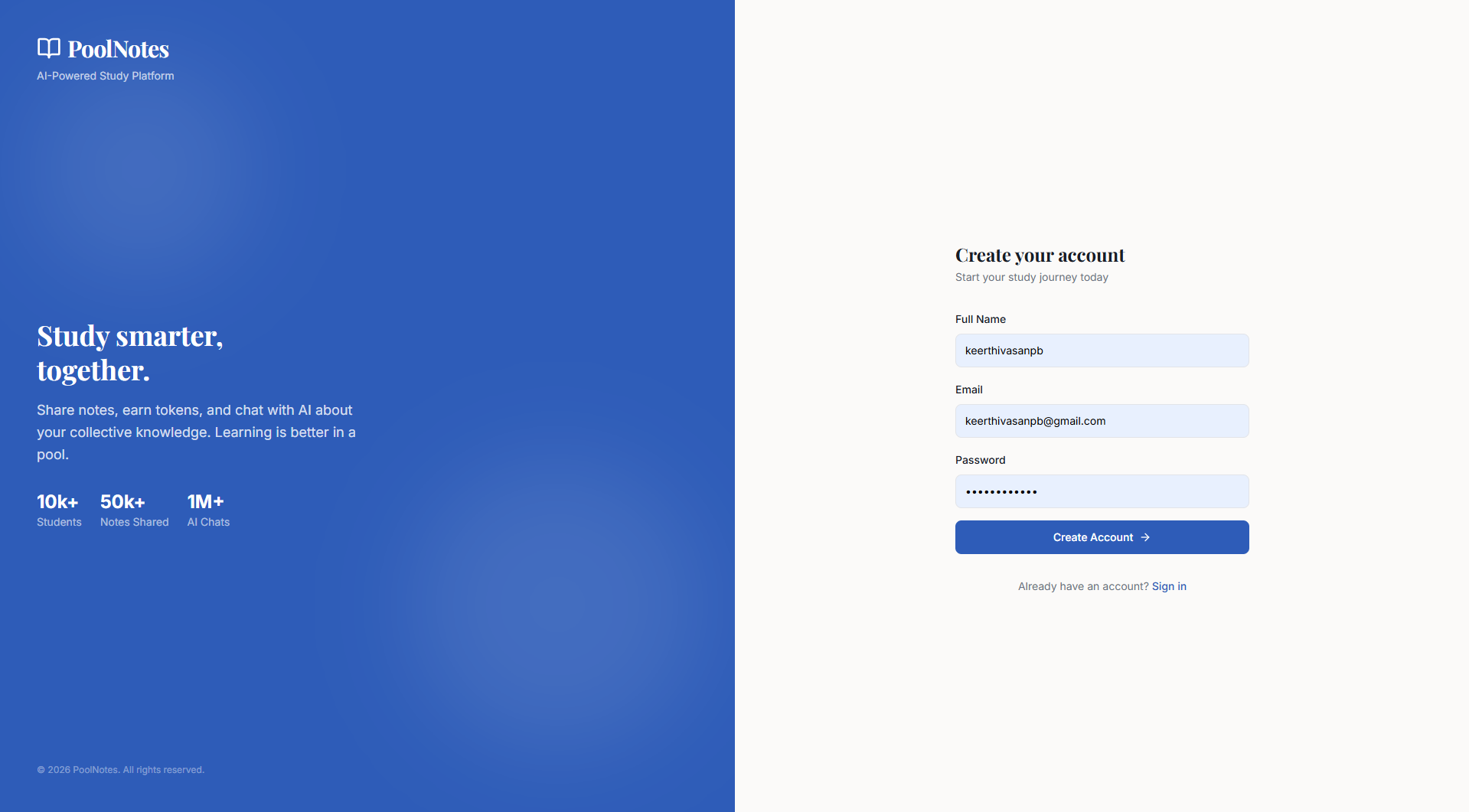
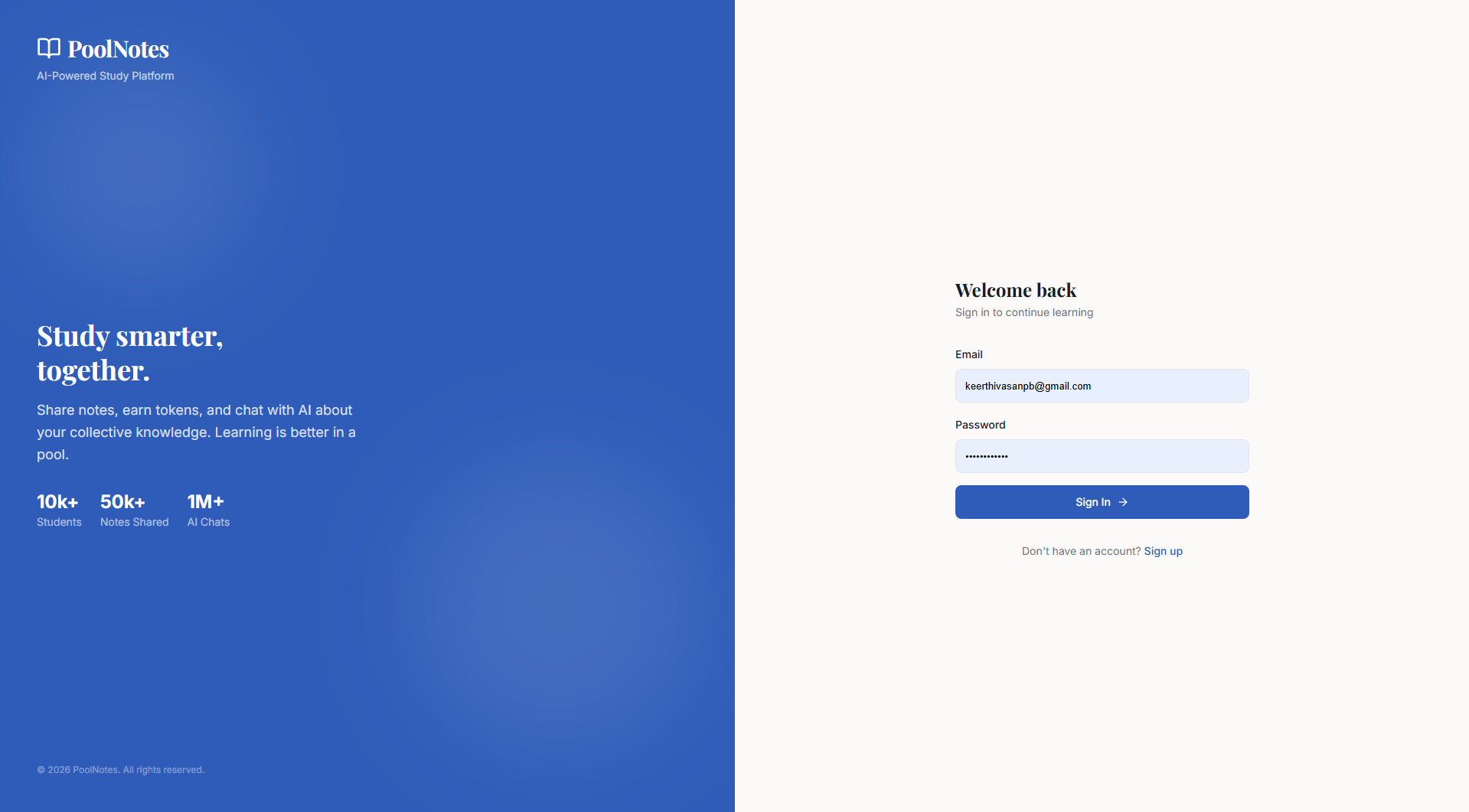
- Auth — Secure signup with mandatory email verification. Issues short-lived access tokens and HTTP-only refresh tokens.
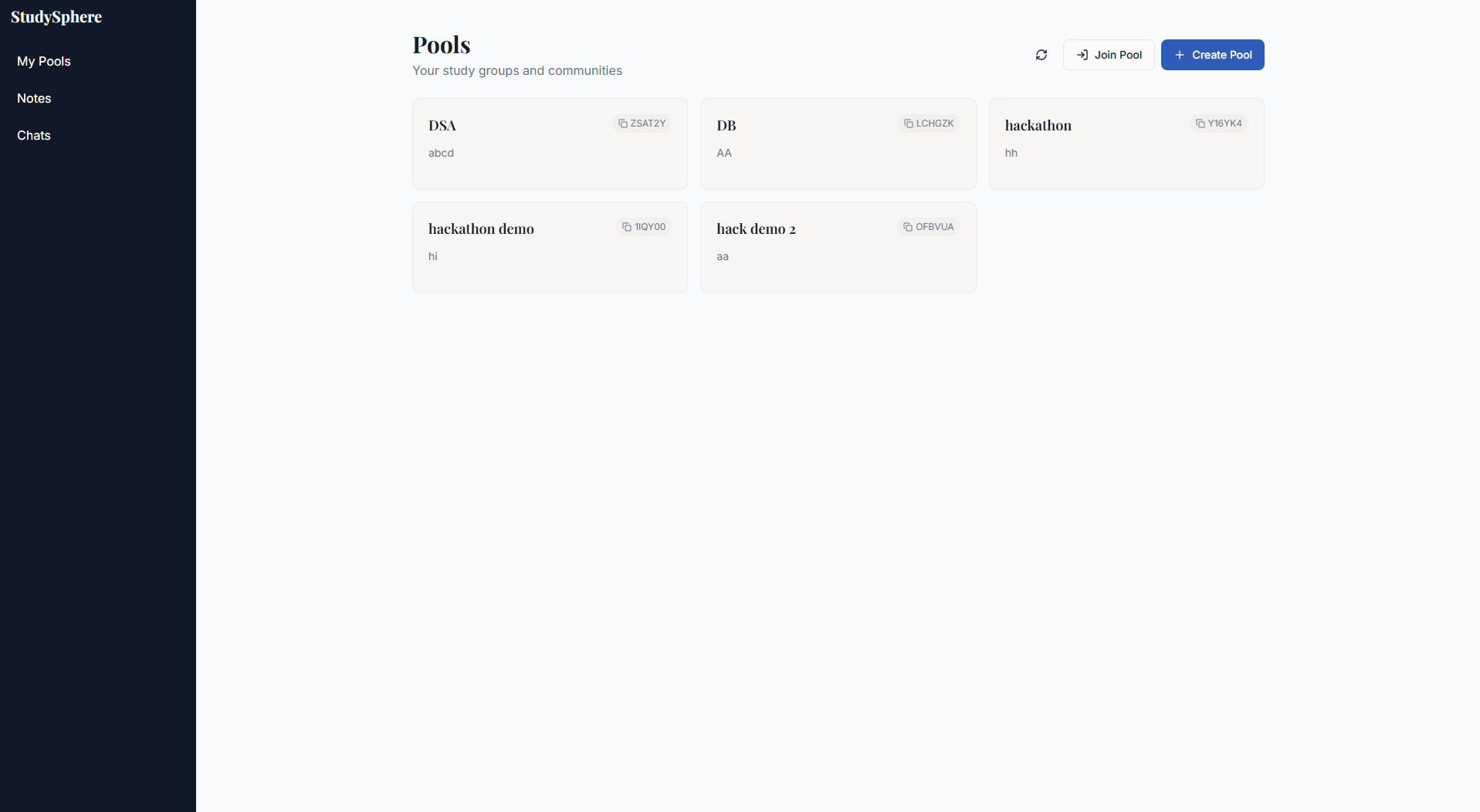
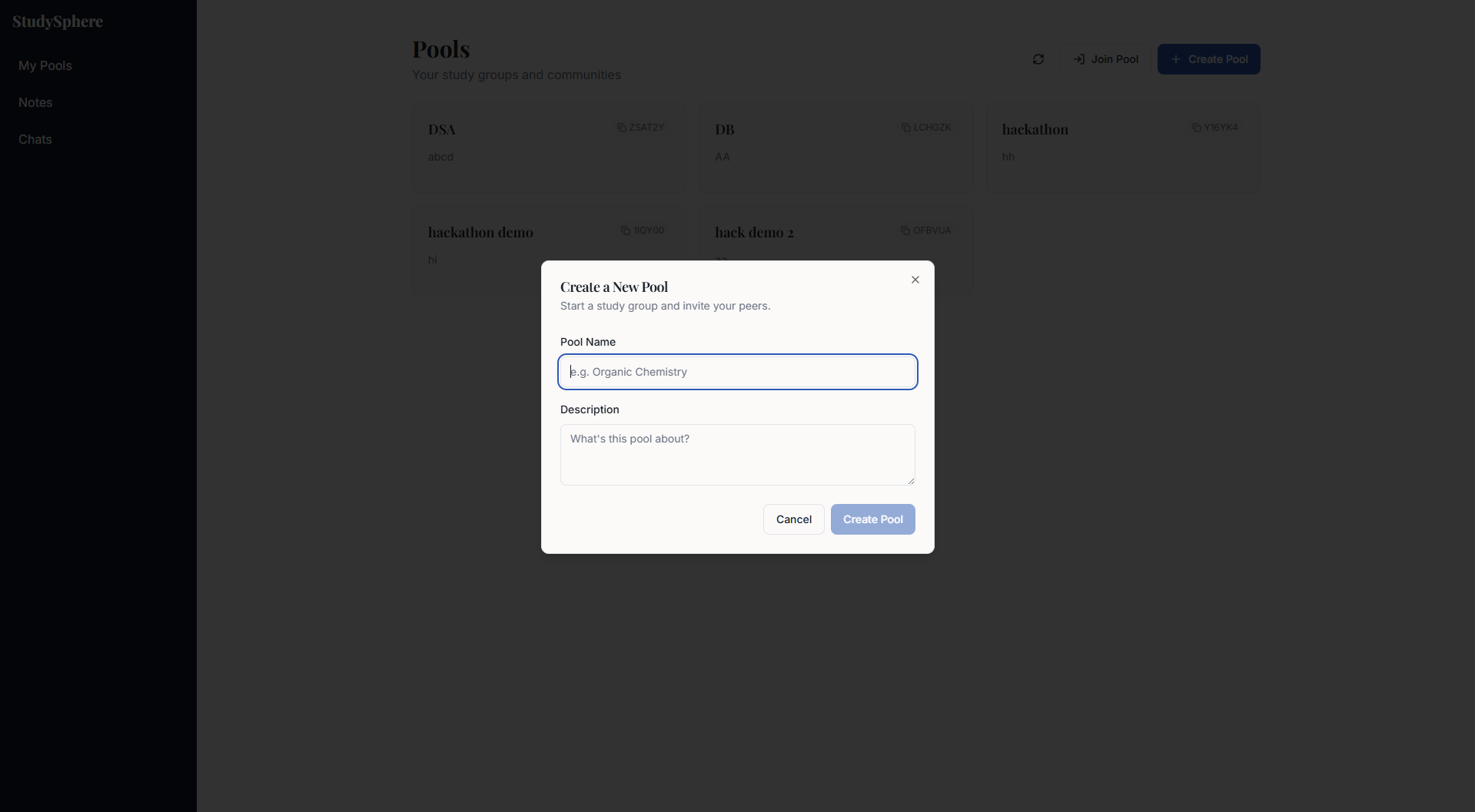
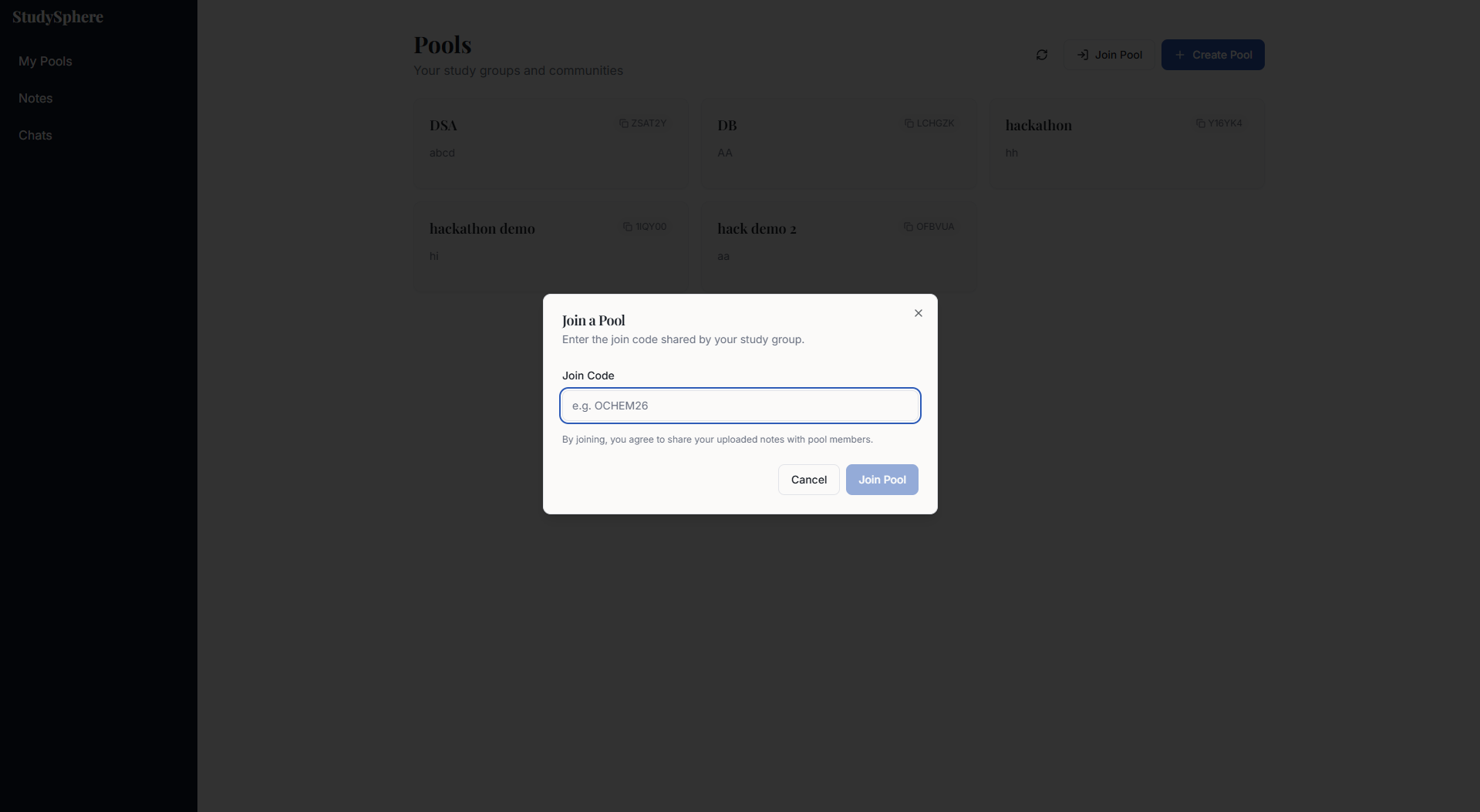
- Pools — Users spin up subject workspaces and distribute cryptographic join codes to classmates.
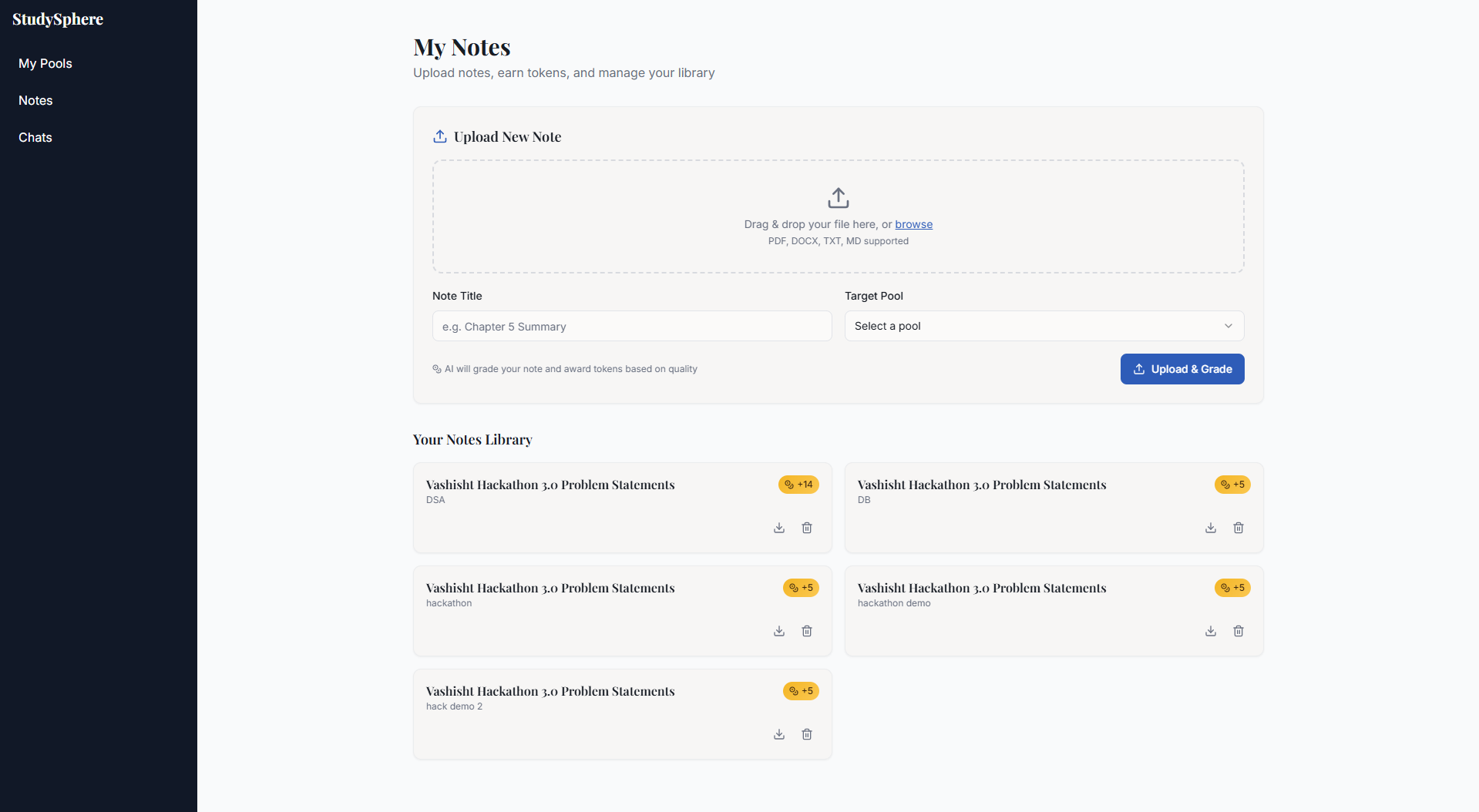
- Note Ingestion — Uploads are parsed by LangChain, split into semantic chunks, assigned metadata, and upserted into isolated Pinecone namespaces.
- Token System — Tokens are stored as integer units. Uploading earns tokens (amount determined by AI grade); each AI query costs 1 token.
- Contextual Q&A — Each prompt validates the user's token balance, retrieves top-k relevant vectors, and returns source-grounded answers via Gemini.
Screenshots
Authentication
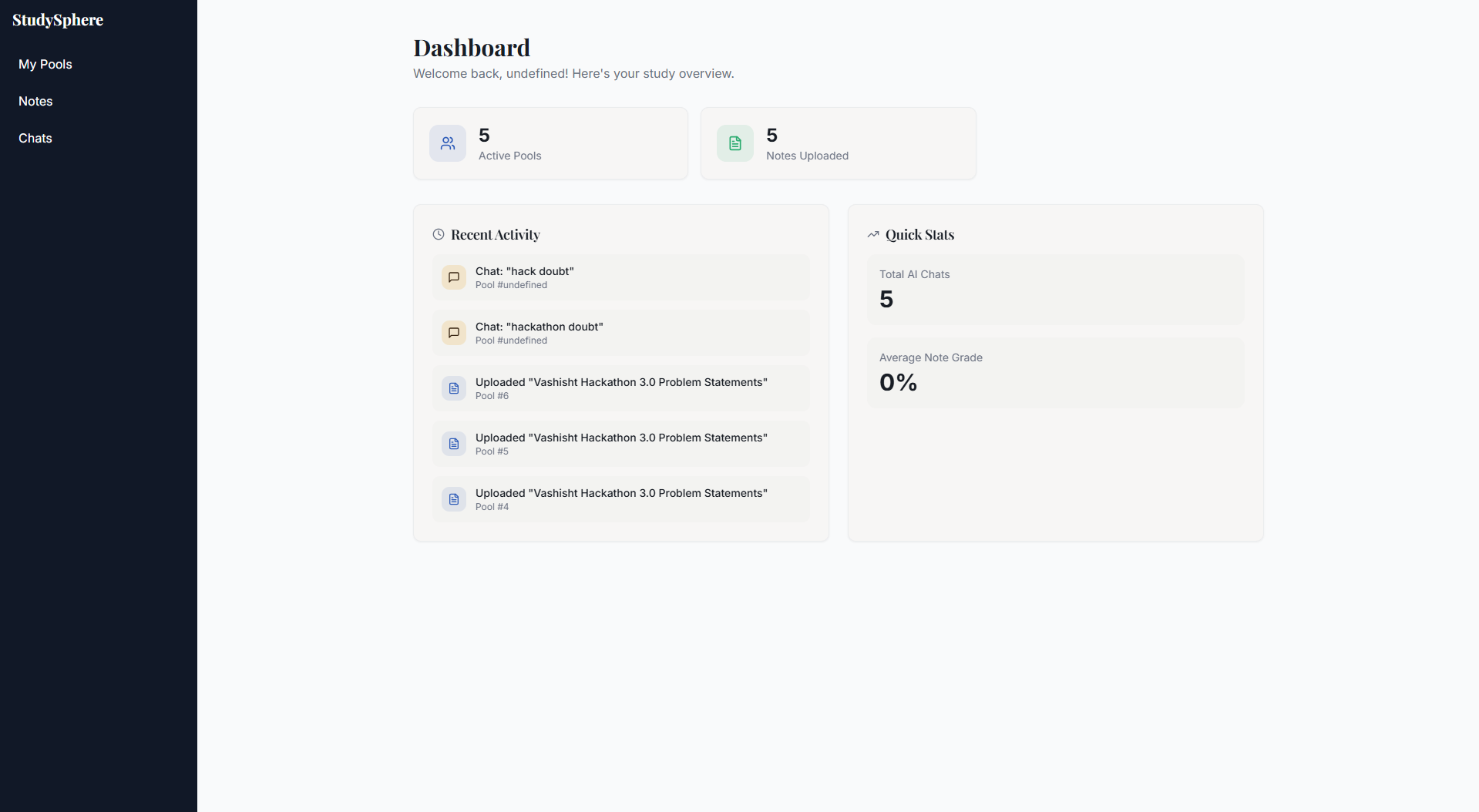
Dashboard
Pools
Notes
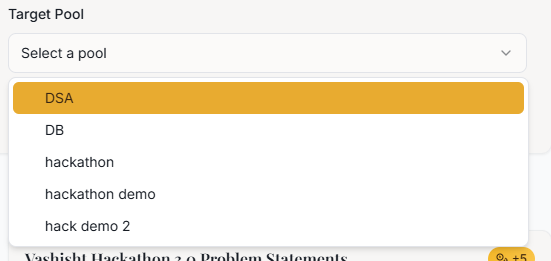
Chat
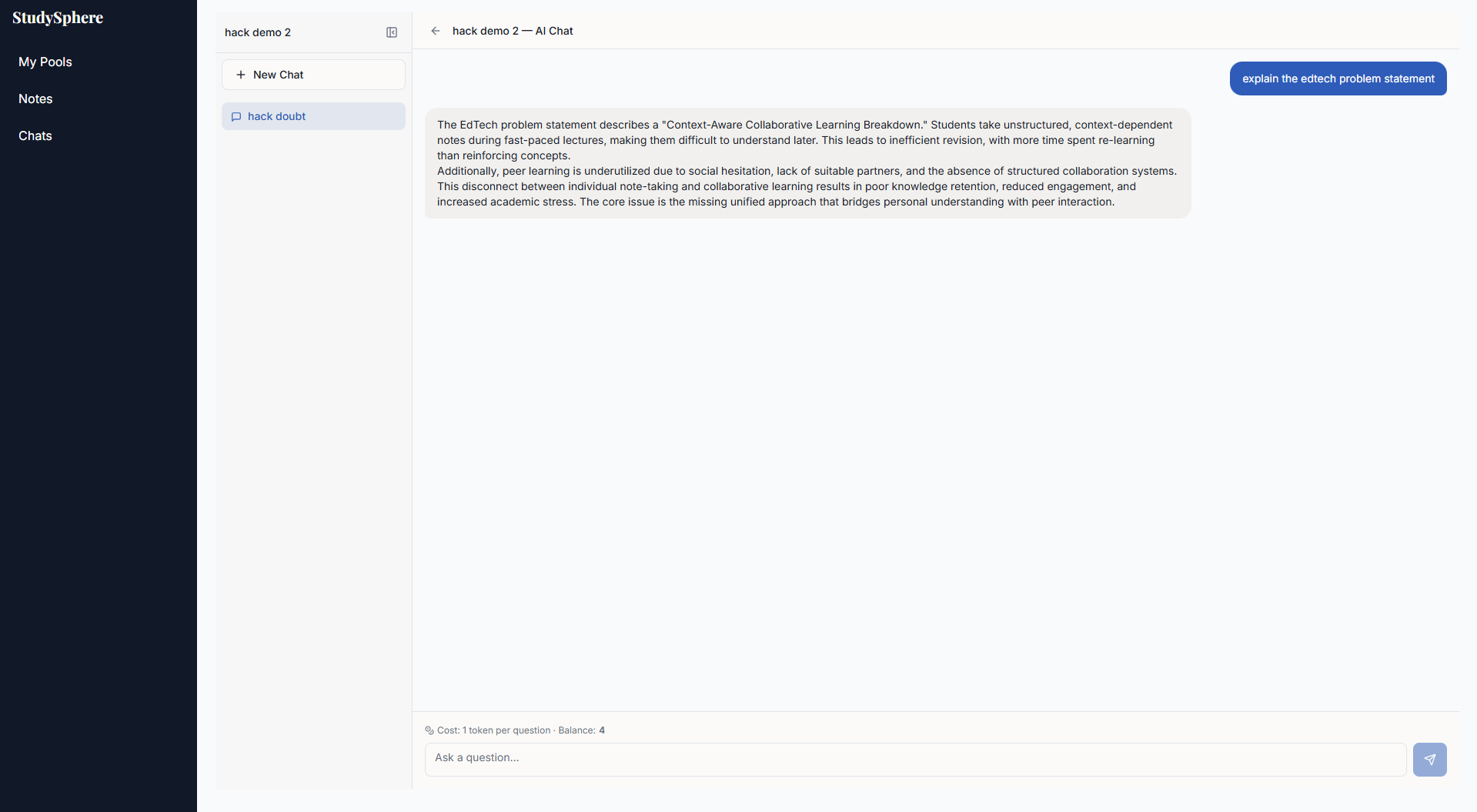
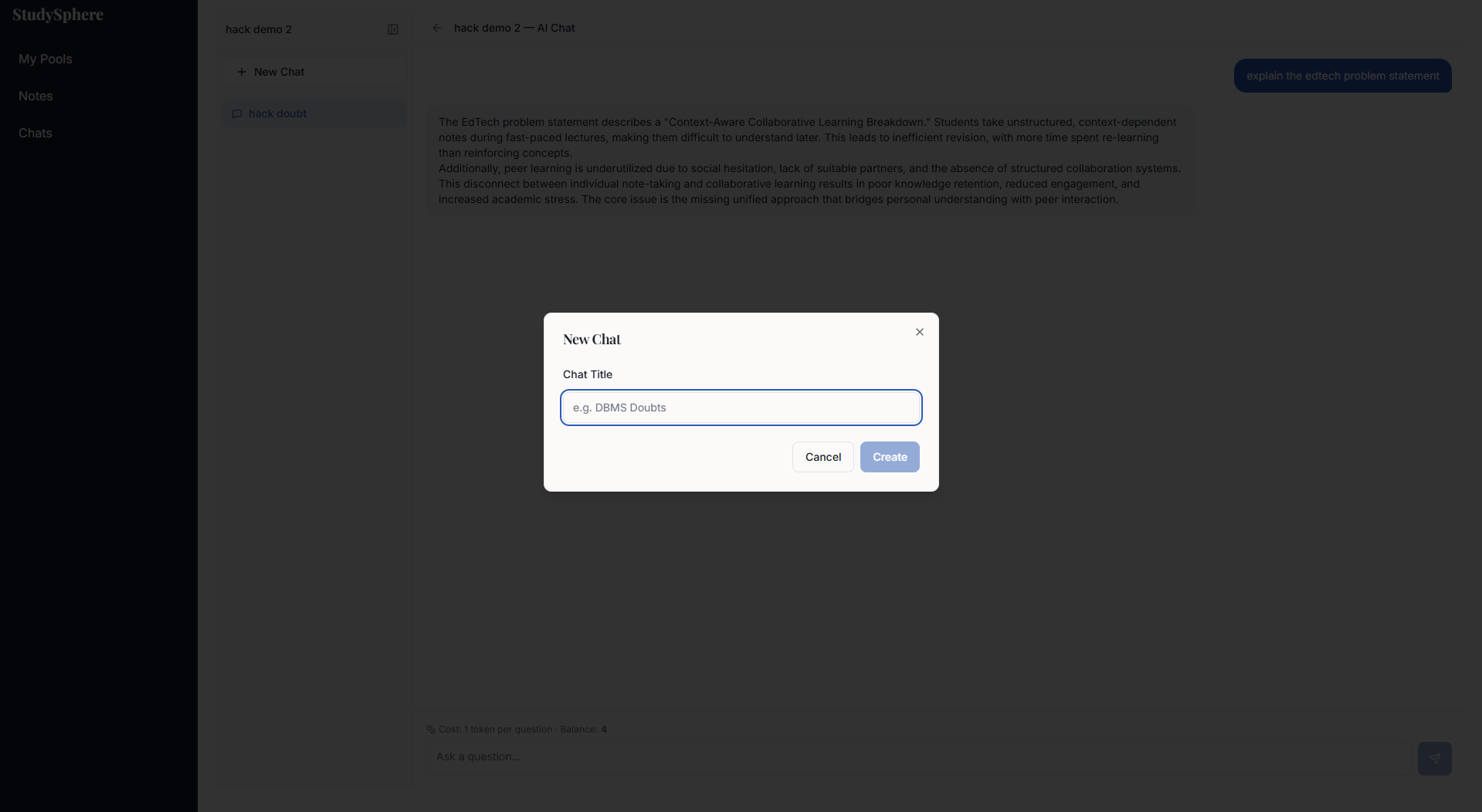
API Reference
All protected routes require:
Authorization: Bearer <access_token>
Some routes use HTTP-only cookies for refresh tokens.
Authentication
| Method | Endpoint | Description |
|---|---|---|
POST | /auth/signup | Register a new account and dispatch verification email |
GET | /auth/verify/:token | Verify user email address |
POST | /auth/signin | Validate credentials and return JWT access tokens |
POST | /auth/refresh | Rotate access keys via secure refresh token cookie |
POST | /auth/logout | Invalidate the active session |
Users & Workspaces
| Method | Endpoint | Description |
|---|---|---|
GET | /users/me | Fetch current user profile metadata |
GET | /users/me/:id | Fetch pool statistics for a specific user |
POST | /pools | Create a new pool and generate a unique access code |
POST | /pools/join | Join an existing workspace via shared code |
GET | /pools | List all active workspaces for the current user |
Chat & RAG Engine
| Method | Endpoint | Description |
|---|---|---|
POST | /chats | Initialize an isolated conversation inside a pool |
GET | /chats | Fetch global chat logs for the workspace |
POST | /chats/:chatId/ask | Validate token budget, query Pinecone, return AI response |
GET | /chats/:chatId | Load historical message thread for a specific chat |
Notes
| Method | Endpoint | Description |
|---|---|---|
POST | /notes | Upload a file (multipart/form-data), run auto-grading, mint tokens |
GET | /notes/:poolId | List metadata for all notes in a pool |
GET | /notes/:noteId | Retrieve raw text and evaluation history for a note |
Local Setup
1. Clone & Install
git clone <your-repository-url>
cd server
npm install
2. Environment Variables
Create a .env file in the server/ root:
PORT=8080
DATABASE_URL=postgresql://user:password@localhost:5432/studysphere

# Security
JWT_SECRET=your_super_secret_access_key
JWT_REFRESH_SECRET=your_super_secret_refresh_key
JWT_EXPIRES_IN=1d
JWT_REFRESH_EXPIRES_IN=5d

# Storage & Email
CLOUDINARY_CLOUD_NAME=your_cloudinary_name
CLOUDINARY_API_KEY=your_cloudinary_key
CLOUDINARY_API_SECRET=your_cloudinary_secret
EMAIL_USER=your_verified_app_email@gmail.com
EMAIL_PASS=your_gmail_app_password
BASE_URL=http://localhost:8080

# Vector & AI
PINECONE_API_KEY=your_pinecone_api_key
PINECONE_INDEX=vashist
PINECONE_HOST=your_pinecone_host_url
GEMINI_API_KEY=your_google_gemini_api_key
3. Run
npm run seed   # Seed the database schema
npm run dev    # Start the dev server with hot reload
Hackathon Evaluation Notes
| Criterion | Weight | Approach |
|---|---|---|
| Innovation | 20% | Token economy framework designed to solve human-centric engagement bottlenecks in peer learning |
| Technical Implementation | 35% | Multi-tenant RAG with isolated Pinecone namespaces and automated AI grading pipelines |
| Feasibility | 20% | Production-ready architecture with integer-based token ledger optimized for classroom scale |
| Video Presentation | 15% | Watch here |
| Deployment | 10% | Live on Vercel |
Roadmap
- Personal Workspace Sandboxing — Private chat module where users can ingest personal documents and research into an exclusive vector space, independent of public pool dynamics.
- Multimodal Note Evaluation — Expand the grading engine to analyze handwriting, math diagrams, and lecture screenshots via Gemini's native vision models.